
RATE THIS EXAMPLE FROM "BENEFICIAL" TO "HARMFUL"
BENEFICIAL HARMFUL
Translate to other languages

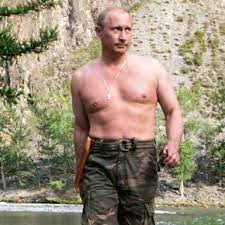
Naked Putin
Background Information
“Naked Putin propaganda” refers to a series of widely circulated images, especially from the mid-2000s to early 2010s, showing Russian President Vladimir Putin shirtless or semi-nude while engaging in physically demanding activities such as horseback riding, fishing, hunting, or swimming, which function as a form of visual political propaganda rather than mere personal photos. These images emerged in a post-Soviet context where Russia faced economic instability, loss of global influence, and a crisis of national identity, and they were used to construct a strong, masculine image of leadership that symbolized control, resilience, and national strength. By emphasizing hypermasculinity, physical dominance, and mastery over nature, the imagery reinforces the idea that a powerful leader’s body reflects a powerful state, contrasting deliberately with Western political leaders who are often portrayed as bureaucratic or intellectual rather than physically assertive. The repeated circulation of these images through state-aligned media contributes to a cult of personality, simplifying political messaging into easily understood visual symbols that require no policy explanation and appeal strongly to nationalism and traditional gender norms. While some images became international memes and were criticized for promoting toxic masculinity or distracting from political issues, they still served their propagandistic purpose by reinforcing authority, normalizing dominance, and mythologizing leadership. Overall, this form of propaganda demonstrates how modern political power can be legitimized through visual symbolism, emotional appeal, and identity construction rather than democratic discourse or detailed policy debate.
Technique Used
Activate Emotion
This is propaganda because
This is considered propaganda because the images are deliberately constructed and widely distributed to shape public perception of Vladimir Putin rather than to inform the public objectively. By repeatedly portraying him as physically strong, fearless, and dominant over nature, the imagery sends a clear political message that he is a powerful and capable leader who embodies the strength of the Russian state. The focus on his body and masculinity distracts from political controversies, policy failures, or democratic accountability, replacing critical thinking with emotional and symbolic appeal. These visuals simplify leadership into strength and toughness, reinforcing nationalist ideals and traditional gender roles while discouraging alternative interpretations of power. Because the images are promoted through state-aligned media with the intention of influencing attitudes and legitimizing authority rather than presenting neutral information, they meet the core definition of propaganda.
Source
https://www.newyorker.com/humor/borowitz-report/sochi-hotel-guests-complain-about-topless-portraits-of-putin-in-rooms

Comments
No Comments Yet
Share Your Ideas